+ WebFont
URW Baskerville
Starting from $19.95
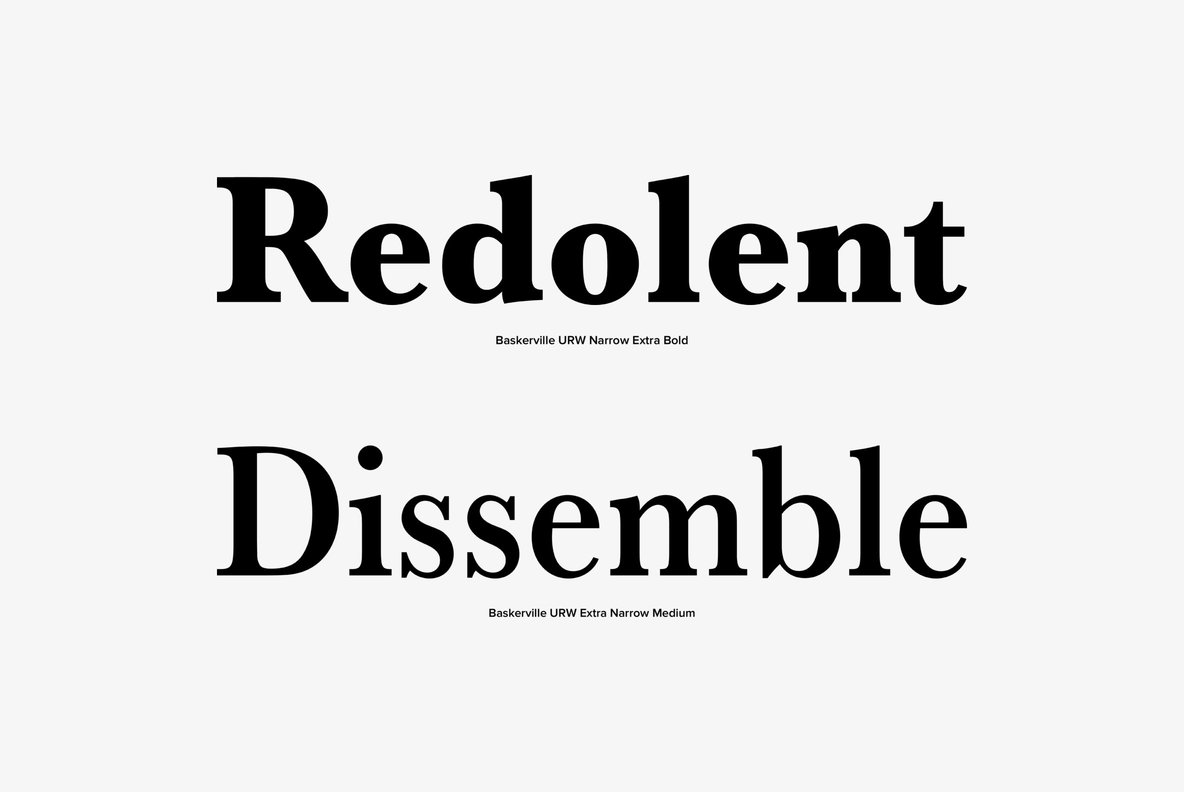
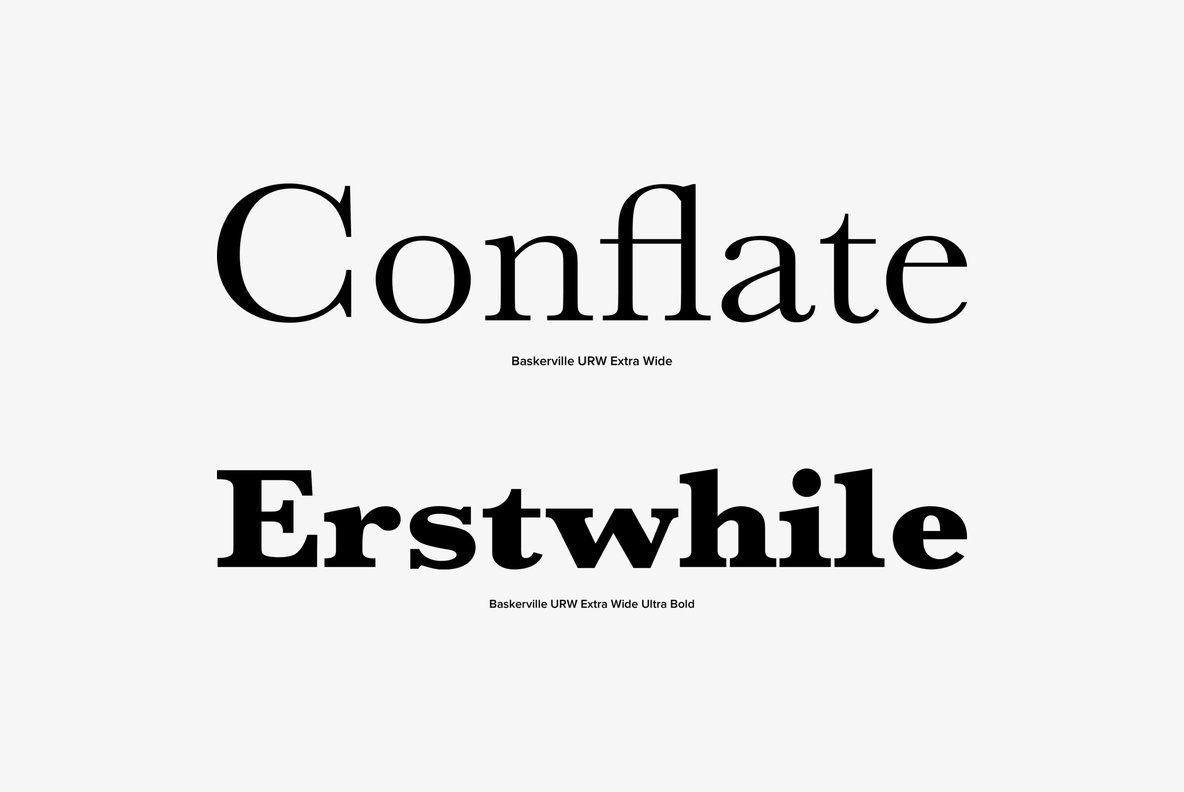
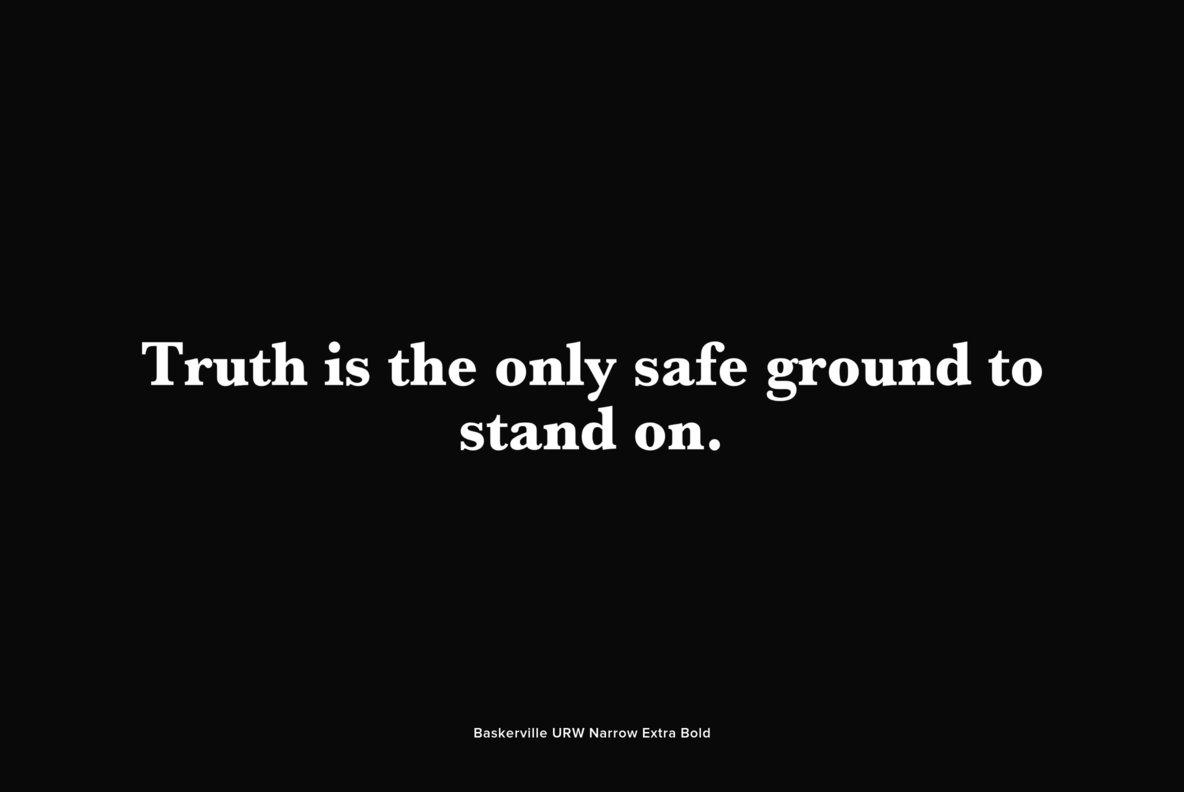
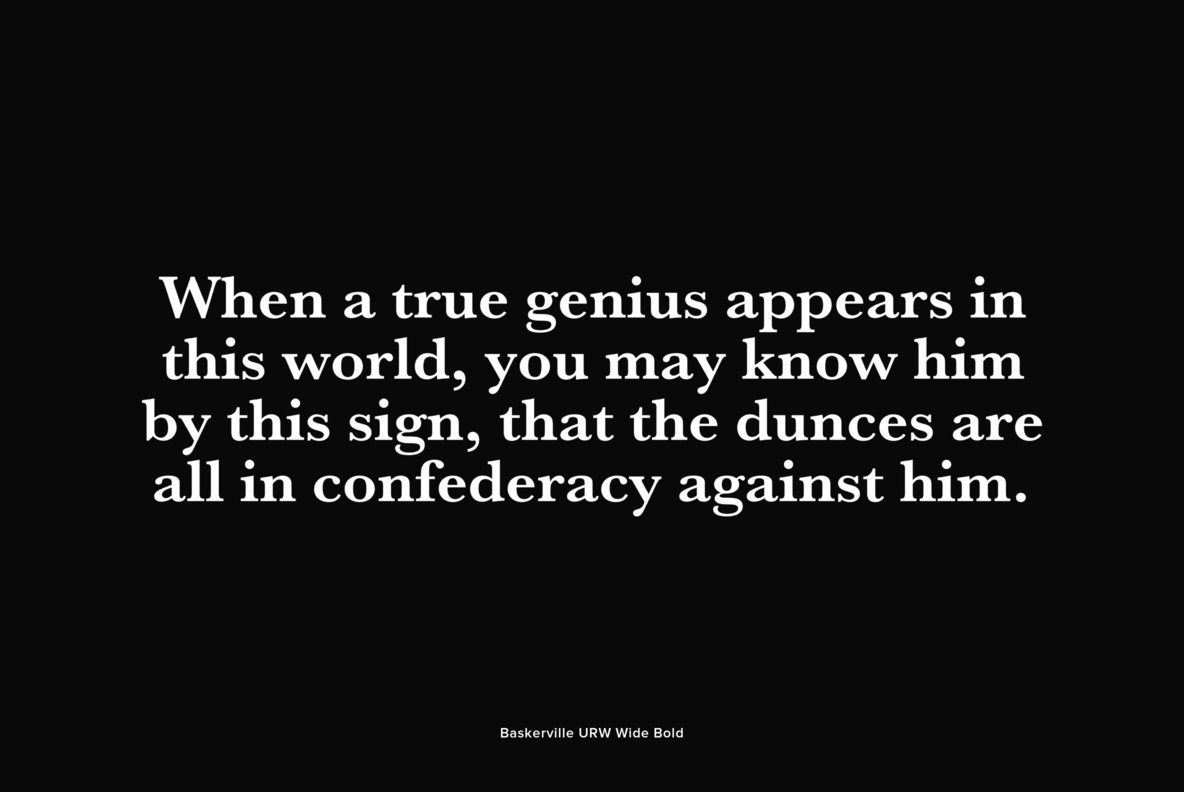
URW Baskerville is a 51 serif font family for an amazing price. If you need a classic serif family in your studio's collection, you cannot go wrong with this release from URW.

URW Baskerville is a 51 serif font family for an amazing price. If you need a classic serif family in your studio's collection, you cannot go wrong with this release from URW.
- Name
- Baskerville URW Regular
- Glyphs
- 488
- Copyright
- Copyright 2010 URW++ Design & Development
- Languages
- Basic Latin, Western European, Euro, Catalan, Baltic, Turkish, Central European, Romanian, Pan African Latin, Dutch, Afrikaans
Page

URW Baskerville is a 51 serif font family for an amazing price. If you need a classic serif family in your studio's collection, you cannot go wrong with this release from URW.
- Name
- Baskerville URW Regular
- Glyphs
- 488
- Copyright
- Copyright 2010 URW++ Design & Development
- Languages
- Basic Latin, Western European, Euro, Catalan, Baltic, Turkish, Central European, Romanian, Pan African Latin, Dutch, Afrikaans

200pt

100pt

75pt

50pt

25pt
- Name
- Baskerville URW Regular
- Glyphs
- 488
- Copyright
- Copyright 2010 URW++ Design & Development
- Languages
- Basic Latin, Western European, Euro, Catalan, Baltic, Turkish, Central European, Romanian, Pan African Latin, Dutch, Afrikaans
Formats
Mobile Font Licensing is available for this item in your shopping cart.
-
ViewNameFormat OptionsPricePurchase
-
Baskerville URWBaskerville URW BoldBaskerville URW Bold ObliqueBaskerville URW Extra BoldBaskerville URW Extra Bold ObliqueBaskerville URW Extra NarrowBaskerville URW Extra Narrow BoldBaskerville URW Extra Narrow Bold ObliqueBaskerville URW Extra Narrow Extra BoldBaskerville URW Extra Narrow Extra Bold ObliqueBaskerville URW Extra Narrow MediumBaskerville URW Extra Narrow Medium ObliqueBaskerville URW Extra Narrow Regular ObliqueBaskerville URW Extra Narrow Ultra BoldBaskerville URW Extra Narrow Ultra Bold ObliqueBaskerville URW Extra WideBaskerville URW Extra Wide BoldBaskerville URW Extra Wide Bold ObliqueBaskerville URW Extra Wide Extra BoldBaskerville URW Extra Wide Extra Bold ObliqueBaskerville URW Extra Wide MediumBaskerville URW Extra Wide Medium ObliqueBaskerville URW Extra Wide Regular ObliqueBaskerville URW Extra Wide Ultra BoldBaskerville URW Extra Wide Ultra Bold ObliqueBaskerville URW MediumBaskerville URW Medium ObliqueBaskerville URW NarrowBaskerville URW Narrow BoldBaskerville URW Narrow Bold ObliqueBaskerville URW Narrow Extra BoldBaskerville URW Narrow Extra Bold ObliqueBaskerville URW Narrow MediumBaskerville URW Narrow Medium ObliqueBaskerville URW Narrow Regular ObliqueBaskerville URW Narrow Ultra BoldBaskerville URW Narrow Ultra Bold ObliqueBaskerville URW Regular ItalicBaskerville URW Regular ObliqueBaskerville URW Ultra BoldBaskerville URW Ultra Bold ObliqueBaskerville URW WideBaskerville URW Wide BoldBaskerville URW Wide Bold ObliqueBaskerville URW Wide Extra BoldBaskerville URW Wide Extra Bold ObliqueBaskerville URW Wide MediumBaskerville URW Wide Medium ObliqueBaskerville URW Wide Regular ObliqueBaskerville URW Wide Ultra BoldBaskerville URW Wide Ultra Bold Oblique





-
-
-
-
-
-
-
-
-
-
-
-
-
-
-
-
-
-
-
-
-
-
-
-
-
-
-
-
-
-
-
-
-
-
-
-
-
-
-
-
-
-
-
-
-
-
-
-
-
-
-
Foundry: URW++
URW Baskerville is a 51 serif font family for an amazing price. If you need a classic serif family in your studio's collection, you cannot go wrong with this release from URW.
Baskerville is a transitional serif typeface designed in 1757 by John Baskerville (1706-1775) in Birmingham, England. Baskerville is classified as a transitional typeface, positioned between the old style typefaces of William Caslon, and the modern styles of Giambattista Bodoni and Firmin Didot.
The Baskerville typeface is the result of John Baskerville's intent to improve upon the types of William Caslon. He increased the contrast between thick and thin strokes, making the serifs sharper and more tapered, and shifted the axis of rounded letters to a more vertical position. The curved strokes are more circular in shape, and the characters became more regular. These changes created a greater consistency in size and form.
Baskerville's typeface was the culmination of a larger series of experiments to improve legibility which also included paper making and ink manufacturing. The result was a typeface that reflected Baskerville's ideals of perfection, where he chose simplicity and quiet refinement. His background as a writing master is evident in the distinctive swash tail on the uppercase Q and in the cursive serifs in the Baskerville Italic. The refined feeling of the typeface makes it an excellent choice to convey dignity and tradition.
In 1757, Baskerville published his first work, a collection of Virgil, which was followed by some fifty other classics. In 1758, he was appointed printer to the Cambridge University Press. It was there in 1763 that he published his master work, a folio Bible, which was printed using his own typeface, ink, and paper.
The perfection of his work seems to have unsettled his contemporaries, and some claimed the stark contrasts in his printing damaged the eyes. Abroad, however, he was much admired, notably by Fournier, Bodoni (who intended at one point to come to England to work under him), and Benjamin Franklin.
Baskerville is a transitional serif typeface designed in 1757 by John Baskerville (1706-1775) in Birmingham, England. Baskerville is classified as a transitional typeface, positioned between the old style typefaces of William Caslon, and the modern styles of Giambattista Bodoni and Firmin Didot.
The Baskerville typeface is the result of John Baskerville's intent to improve upon the types of William Caslon. He increased the contrast between thick and thin strokes, making the serifs sharper and more tapered, and shifted the axis of rounded letters to a more vertical position. The curved strokes are more circular in shape, and the characters became more regular. These changes created a greater consistency in size and form.
Baskerville's typeface was the culmination of a larger series of experiments to improve legibility which also included paper making and ink manufacturing. The result was a typeface that reflected Baskerville's ideals of perfection, where he chose simplicity and quiet refinement. His background as a writing master is evident in the distinctive swash tail on the uppercase Q and in the cursive serifs in the Baskerville Italic. The refined feeling of the typeface makes it an excellent choice to convey dignity and tradition.
In 1757, Baskerville published his first work, a collection of Virgil, which was followed by some fifty other classics. In 1758, he was appointed printer to the Cambridge University Press. It was there in 1763 that he published his master work, a folio Bible, which was printed using his own typeface, ink, and paper.
The perfection of his work seems to have unsettled his contemporaries, and some claimed the stark contrasts in his printing damaged the eyes. Abroad, however, he was much admired, notably by Fournier, Bodoni (who intended at one point to come to England to work under him), and Benjamin Franklin.
Once this item has been added to your cart, you can update the User License amount, and/or add our affordable Extended Licenses for Mobile Apps (iOS, Android, etc) or eBooks (Kindle, PDF, etc).
Fonts are available for Macintosh, Windows or as WebFonts. Available formats are listed in the Buying Options tab above.
Related